June 02, 2012

Snake Boatin'

A bunch of friends and I extended Memorial Day weekend to Tuesday and spent three days rafting the beautiful and mellow Hell's Canyon section of the Snake River.  The vegetation in the canyon was greener than I've ever seen it.  When we were rained on for much of our first day on the water, I figured out why.

The Crew (minus Steph)
Characters on this trip included Jake, Steph, Sara, Ken, Megan, Evan, Craig, Melinda, Sheri, Andrew, and me.  We made our way pretty leisurely down the river in one paddle boat, two gear boats, and two kayaks.  With flows around 14,000 cfs, the river was noticeably lower than last year when it was closer to 20,000 cfs.  In comparison, these lower flows seemed to make the two biggest rapids (Wild Sheep and Granite) a little mellower but compensated by creating a few interesting rapids further down river that I didn't remember.  One of these rapids further down river was the culprit of our only carnage of the trip, where the paddle boat tipped all the passengers out except for Steph, the paddle captain.  With everyone else downriver, the swimmers were quickly picked up and I don't think we lost anything except for maybe a pair of sunglasses.

Loading the Gearboats at the Put-In
Perhaps my favorite picture of the trip
Mr. Bacon Squared
The Greenness of Hell's Canyon in late May
This was the first raft trip I'd ever organized, and I had a great time doing it!  Thanks to help from Jake and Steph, we were able to gather all the gear we needed and we didn't seem to forget anything too major, or minor for that matter.  Much thanks to Steph's dad, as most of the gear we borrowed was his.  And yes, like all the other recent raft trips I've been on, I now want my own boat a little more than before.

April 10, 2012

April Blower Pow in the Washington Cascades

I'll be the first to admit that it's pathetic how long it's been since I've updated this blog.  It's no coincidence that the last time I posted was the day before I started my job. . . turns out my job, although satisfying, is not particularly blog worthy.  I've been skiing, typically with Ava, most every weekend this winter.  Unlike most of the country, Washington has not been snow deprived, particularly in the north.  Mt. Baker was claiming a base measurement of 315 inches (over 26 feet), which is positively stupid.

Thanks to Evan (and Earl, the God of weather) we actually got some decent pictures of our exploits last Saturday.  Although mostly sunny and fairly warm, the powder on the north facing slopes was surprisingly well preserved.  Kris, Evan, Ava and I took full advantage of this and had a glorious day up on Lichtenberg Mountain.


January 08, 2012

Powder in the North Cascades

Prior to starting my new job (tomorrow morning, as I type this), Ava and I got away for a long weekend.  We were planning to road trip to somewhere like Montana or Wyoming, but the complete lack of snow throughout the lower 48 made this unreasonable.  Conveniently, the only place with a decent snow pack as well as a promising weather forecast was the Mt. Baker area in northern Washington.

We ended up spending three nights in the town of Sumas (seven blocks from Canada), skiing at the resort on Thursday and hitting up the backcountry on Friday and Saturday.  When we returned home on Sunday, we read that there was 19 inches of fresh snow over the three days that we were out.  All we knew at the time was that the skiing was incredible!

Ava shredding the gnar
video

Yahoo pow pow!!!
video

December 02, 2011

Late Season Archery Elk

While researching the late season elk hunting opportunities in Washington, I generally found two types of opinions: 1) It's great!  I usually get my elk during the late season, and 2) It's nearly impossible to kill an elk with a bow during the late season - a total waste of time.  I hate to be a pessimist, but after 4.5 days of hard hunting I'm siding with the latter.

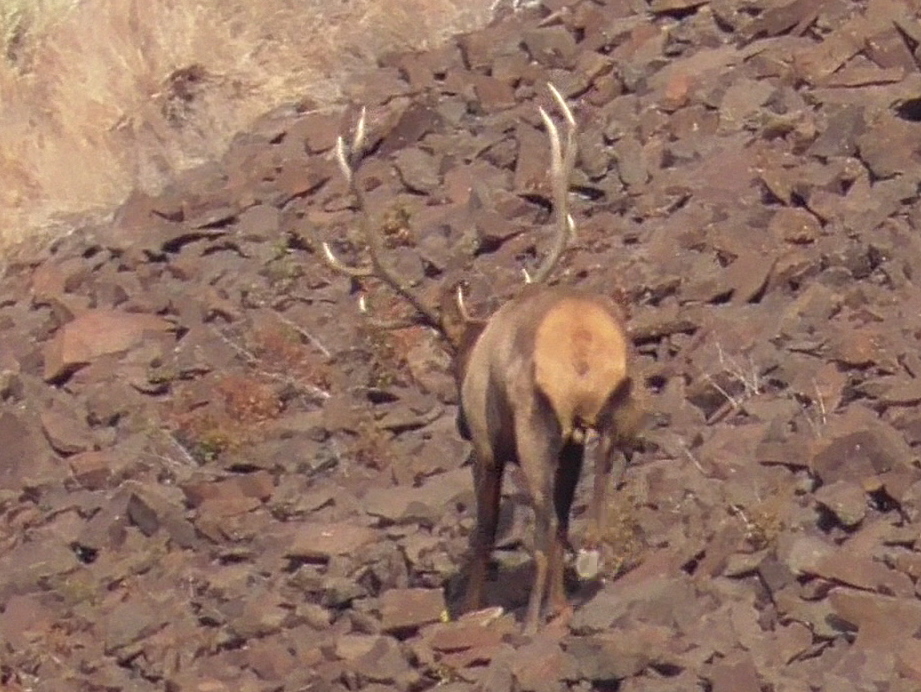
I hunted Sunday evening through Thursday morning this week near Yakima in the Cowiche unit.  I found my first animals mid day on Monday, which included five deer.  On Tuesday morning I spotted some elk!  I saw three or four though a narrow gap in the trees, but figured there were more.  They were about 1,000 feet above me, near the top of a ridge.  I knew they would move before I got there, but I had to make an attempt.  When I got close I found lots of sign, including tracks, fresh scat, and the smell of elk urine.  I followed their tracks and spotted them about 1.5 miles later at a much lower elevation.  I now counted between 20 and 30 altogether.  They were moving as if they were spooked, which was understandable given the amount of hunters around.  My goal was to figure out where they would spook to and get there before they did.  I ended up guessing about 100 yards off the mark as they crossed below me.  One cow got separated and was maybe 50 yards away, based on the sound of her call as I never saw her.  I attempted to get closer only to find her gone when I could finally see where I thought she was.

Wednesday was filled with furry animals, starting with jumping a black bear at 30 yards.  He stood up and slowly lumbered away.  Next I spotted a coyote with my binoculars.  After walking another hundred yards, I spotted another coyote.  A few miles later I jumped a deer at close range in thick forest.  A half mile after that I jumped a herd of elk, which crashed through the forest at close range but I never managed to see them.  After following their tracks for about a mile, I saw them trotting across an open area about 800 yards away.  When they disappeared over the ridge, I attempted to close the distance but never found them again.  By this point I was probably 6 miles from my camp.  On the way back, I spotted yet another coyote.

Thursday morning was entirely uneventful.  I think I walked between 50 and 60 miles this trip, all off-trail over hilly terrain.  While this effort didn't put any meat in my freezer, it effectively removed any Thanksgiving pounds I might have put on.  Kris and I will be heading out again this weekend to the same area.  I know there are elk there, they're just extremely good at hiding and extra wary after being shot at by rifle hunters for two weeks last month.

November 21, 2011

Ruttin' Rams and Raftin' Rivers

Like the previous 19 years, Jake once again put in for the lottery drawing to hunt Oregon Bighorn Sheep last year.  The odds of drawing are somewhere in the 1/100 to 1/200 range, so there is a good chance that he could have put in for this hunt for the rest of his life and never drawn.  However, in true Jake-luck fashion, he won the lottery.  The hard part was over.

Wanting to make the most of his luck, Jake put a ton of time into researching the unit for which he had drawn (West John Day).  This included talking with private landowners, people who had drawn the tag in recent years and local sheep hunting guides as well as studying maps and making a few scouting trips.  Prior to opening day, he accumulated 21 days of scouting via a series of multi-day float trips down the John Day River.

I received constant updates regarding his progress during this scouting process, including photos of named rams like Flair and Warrior.  Being the savvy hunter that Jake is, while he was scouting he was also trying to put together a strong team of support hunters for the actual hunt.  I knew Jake wanted me to join him, but until the last minute I wasn't sure if I would be able.

About a week and a half before Jake's planned departure date, things fell into place.  On November 7th we started floating down the John Day river in search of the largest ram in Oregon's West John Day unit.

Put-in on the John Day River
The Plan
All of Jake's research and scouting resulted in the following plan.  Jake and I would start floating down the river five days before opening day of the 9-day season.  We would float almost 40 miles in three days, passing several rams in the process, before arriving at Deep Canyon, which we would turn into basecamp.  Once here, we would begin our search for the larger rams Jake had seen on his scouting trip, including a ram he hadn't seen that was rumored to be the largest in the area (Rumor Ram).  Ideally, we would locate Rumor Ram before the season and shoot him on opening day.  One day before opening day, we would be joined by Jake's long-time hunting partner (Kyle) and Kyle's step dad (Loren).

The Team
Jake - As Jake drew the tag, his primary responsibility was to shoot the ram.  He also acted like the CEO, planning the hunt, building his team and organizing everything.
Kyle - With lots of hunting experience, Kyle would serve as a strong set of eyes to help spot the sheep as well as help with devising strategies for finding and shooting a giant ram.
Loren - Loren drew this exact tag in 2009.  Through a similar scouting/research process two years earlier, Loren learned the terrain and habits of the sheep well.  His knowledge and experience would make him a valuable member of the team, as well as his eyes.
Me - With less hunting experience than the other three, I would serve as an additional set of eyes, a rower, a pack mule, a calming agent during exciting times, and round out the team for convenient travel in pairs.

Air guitar?  Contrived and unnecessary.  We have a shovel.
Pre-Season
On the float down to Deep Canyon, we spotted 100's of sheep including many mature rams.  Jake had ambitions of shooting an Oregon state record ram with a bow, so we passed right on by many rams that most sane people would consider a trophy.  We stopped a couple of times to hike up side canyons, exhibiting due diligence so as not to blindly pass by any giant rams that may have eluded Jake on his scouting trips.

Sheep Everywhere
On our third day, we set up a luxurious camp at the base of Deep Canyon which would provide good access to the herd of sheep known to reside primarily between there and Willow Springs Canyon.  Unlike other animals I have hunted, the sheep here don't seem to travel more than a few miles, living their entire lives in a relatively confined area.

On November 10th we began the real leg work, with our primary goal of locating Rumor Ram as well as finding and keeping tabs on other large rams in the area.  In order to see lots of terrain, Jake floated the river in a packable kayak while I hiked to the top of the canyon and looked down at the same terrain Jake was looking up at.  While floating Jake located about 80 sheep, most of them in a single herd very near the river.  In this group was a ram that looked a lot like Flair (aka Ram-a-lamb-a-ding-dong), but appeared bigger!  We would later name this ram Elvis (The King), but I think he might have been the same ram as Flair.  It's also very possible that Rumor Ram = Elvis = Flair, but these are things we will never know for sure.  At any rate, Elvis was big enough that we would want to keep track of his whereabouts as he might very well be the largest ram in the area.

Jake hiking back to camp at sunset

On the 11th Jake and I both hiked to the top of the canyon and searched several miles of the adjacent Willow Springs Canyon (WSC) on our way to pay Elvis and the herd of 50 sheep a visit.  We saw two lone rams in WSC before finding the big herd in the same location as the previous day.  Only this time, Elvis was not with them.  We got within 200 yards of the herd to get a closer look, but Elvis wasn't there.  One ram wandered away from the herd and got within 100 yards of us before spooking and running back.

John Benet 'Ram'sy

We had perfect weather up to this point, but part way though the day the wind picked up.  On the hike back to camp we experienced gusts that we estimated at 70-80 miles an hour.  When we returned to camp, Jake's raft had blown about 100 feet up into camp and our kitchen was in shambles.  Our one saving grace was that Kyle and Loren showed up while we were out and rounded up many of the pieces of our kitchen.

Opening Day
On opening day Loren and I went back to watch the big herd and see if Elvis returned.  We saw five rams on the way there, and once again found the big herd right where we left them the previous evening.  Shortly after finding the herd, a ram we named Chip the previous day wandered by at close range.


Chip
Meanwhile, Jake and Kyle hiked upriver to ensure that we covered all areas that we thought might hold sheep.  They found none and by afternoon had hiked all the way to where Loren and I were.  We had just left the herd after watching them for a couple hours.  Jake and Kyle were tired of not seeing sheep, so they went out to the vantage point where Loren and I had been.  As soon as they got in view of the herd, they saw Elvis moving toward the herd form a ways off, coming in to see if any of the ewes were in heat.  When they radioed to say that they saw him, I immediately doubled back to join them and get a look at The King.

Elvis
At this point, we had about two hours of daylight left.  Jake thought this was enough time to put a stock on Elvis and try to get within bow range.  After Jake descended 1,000 feet and started to circle around, Kyle and I watched Elvis through the spotting scope turn his head and stare unflinchingly at Jake, 600 yards away.  Jake continued to circle around and come back up to join Kyle and me.  In the process, Elvis went back to join the herd and at one point Jake passed within about 250 yards of the big ram.

When all four of us went back to find Elvis and the big herd the following day, the herd was back but we never saw Elvis.  The wind that started the day before opening day had still not let up.

Day Three
The hike from camp to where the big herd was hanging out took about two hours of brisk hiking, more if you glassed for sheep along the way.  Jake was growing fed up with the wasted hours of daylight as we hiked back and forth, so we devised a plan for Jake to bivy at the top of the canyon above the herd for as many days as it took for him to kill the big ram.  Consequently, Jake and I got up at 3:00 am and hiked with full packs out to the point above the big herd before first light.  As the sun rose, we were disheartened to see no sheep where we had seen 40 to 50 each of the previous 4 days.

We spent a couple hours glassing the adjacent hillsides.  Jake spotted chip and several ewes way over on the other side of WSC as well as a few other small groups that we thought could very likely be splintered from the big herd.  It appeared the big herd had broken up, which would make it harder to relocate Elvis as the herd acted as a beacon that would draw him in a couple times a day to check on the ewes.

While Jake and I were out looking for the herd, Loren and Kyle had rowed across the river and were glassing the steep cliffs between camp and the last known location of the herd.  At around 9:30 am, Jake and I got in touch with Kyle and Loren on the radio.  They said they saw a "big, big ram" with several other rams that were also big, but at the distances they were looking they couldn't accurately identify him.  Even if it wasn't Elvis, Kyle's description involving two uses of the word "big" was enough to get Jake going in that direction.  We left Jake's pack and bivy stuff at the point and began working our way back along the ridge to where Kyle and Loren had seen the rams.

All of a sudden sheep were everywhere.  Some had crested the ridge and were heading down into WSC.  We saw about 10 sheep in WSC and expected to see the group of big rams there too.  When we didn't, we continued along the ridge.  As I followed directly behind Jake, he stopped suddenly.  He saw several sheep off the other side of the ridge (the John Day River side).  As I stayed back, Jake snuck in closer for a better look at what appeared to be about 30 sheep.

Due to the persistent winds as well as the terrain that Elvis was sticking to, Jake opted to put down his bow hunt with his rifle.

I knew they were close and was hoping that Jake was waiting for a clear shot at Elvis.  I thought I would hear a gun shot at any moment, followed by news on the radio that Elvis was down.  A few minutes later, Jake came crawling back through the grass.  He said it was definitely Elvis along with a ram he had previously named Warrior and several other rams and ewes.  He circled around to get in a better position as the sheep were sidehilling near the top of the canyon in the direction of camp.

Jake putting the sneak on Elvis
I remained out of site and once again hoped I would soon hear a gunshot.  Minutes later, I did!  I was convinced that Elvis's time was up.  Thirty seconds after the shot I saw Jake running back up the hill and circling around to get in better position for a follow up shot.  Then . . . nothing.  I turn on my radio to ask Kyle and Loren if they have any idea what's going on.  They said they were watching Elvis sidehilling back towards Deep Canyon, moving like he hadn't been hit.  When Jake and I finally reconnected we moved quickly back towards deep canyon in hopes of cutting Elvis off as made his way to wherever he was going.

Kyle and Loren did a good job of tracking his progress from the other side of the river and managed to guide us to his location as he ascended the hill and crossed into the plains at the top of the canyon.  So good, in fact, that Jake saw a flash of Elvis about 100 yards away as he leaped a fence, landed on private property, and continued sprinting out of site and perhaps out of the state.  We searched Deep Canyon for a while, but it seemed that Elvis stayed up on the plateau and didn't drop into it.

Bear in mind that there was a lot of confusion during this chase.  Was Elvis hit?  Were Kyle and Loren following the ram that Jake shot at or a different ram?  After things calmed down, Jake and I went back to where the ram was when he originally shot at it.  We found the exact location, followed his exit path for a few hundred yards, and found no blood.  It was a clean miss.

With all the stirring up we did, we decided there wasn't much reason for Jake to bivy, so we started back toward the point to retrieve his pack and head back toward camp.  On the way to our cache, Kyle, still on the other side of the river, got back on the radio and said, "This hunt isn't over yet.  That other big ram is still hanging out and I'm watching him."  After a minute or two of deliberation, Jake decided to go after Warrior, who we decided was the second biggest ram in the unit (maybe even the first since Elvis had left the building). I would continue out to the point, grab Jake's pack, and head back toward camp, intersecting Jake and Warrior along the way.

As I was nearing the place on the ridge where I thought Jake would be directly below me, I began hearing radio chatter.  I spoke with Kyle to learn that several shots had been fired, none of which I could hear due to the wind.  As I waited for another update, two more shots were fired only a few hundred yards from me, and I didn't hear these either.  Then I hear on the radio from Kyle that Jake has a ram down and they're crossing the river to join in the photo session and butchering.  I immediately grabbed my pack, Jake's pack, and Jake's bow and started down the hill to the location of Jake and his ram.

Left to Right: Back Row - Kyle, Loren, Jake, Josh     Front Row - Warrior
I arrived shortly before Kyle and Loren and helped Jake pull the ram out of the ravine that it fell into.  Kyle and Loren then arrived and we managed to get a metric shit tonne of photos just before it got dark.

Trophy Photo #1

Trophy Photo #2
After caping, butchering, and packing the ram out about 1.5 miles, we got back to camp around 8:30.  With our 3:00 am start, this made for a long day.  It felt great to have such hard work result in an edible reward.

All packed up and ready to leave base camp
Reflections
Overall, the trip was extremely enjoyable.  I feel very honored that Jake wanted me to be a part of this special, once in a lifetime hunt (he can never draw this tag again).  It also conjured up sentimental memories of Jake's late father and my dad, who both drew a Steens Mountain Oregon sheep tag in the same year about 25 years ago.  A year or two after their hunt, Jake and I went back to the Steens with them.  I have fond memories of being about 10 years old, glassing for sheep, fishing for trout, and porcupine hunting.  Whereas our fathers both hired guides and killed nice rams, Jake put this hunt together on his own, avoided paying landowners for access by floating the river, put the hunt together very inexpensively, and managed to kill one of the largest California Bighorns in the state.  Also, I can't say enough about how great it was to combine a multi-day rafting trip with a hunting trip.

On the more constructive side, this trip highlighted two things for me: the difference between bow hunting and rifle hunting, and the difference between trophy hunting and meat hunting.  Jake had the option to use a bow or a rifle on this hunt.  While he could have killed a ram with a bow, it would have been much more difficult and he would have had to lower his standards and be much more opportunistic.  As it was, he opted to maintain his ambitious goals and switch to a more powerful weapon.  We may have had to wait days just for the wind to die down enough to accurately shoot an arrow.  The sporting nature of the bow and arrow remains as appealing as ever to me, but at the same time I recognize that the "boom stick" is a more effective way to fill the freezer.

While Jake's goal to kill the largest ram in the unit created an excellent challenge, and I love a good challenge, I still lean toward my Darwinian hunting style.  For example, the big herd contained a good ram with an obvious limp.  My instincts told me that this was the ram to pursue, even if there was one with larger horns right next to him.  To select the largest, most fit ram and eliminate him from the gene pool seems contradictory to the natural order.  With that said, I understand that trophy hunting brings a ton of money to state fish and wildlife departments.  This money has a lot to do with why those animals are even there in the first place, so there is a positive side to trophy hunting too.  It's just not for me.  As a side, bighorn sheep were a native species in Oregon.  Humans impacted their numbers with uncontrolled hunting, but disease brought in by domestic sheep is what did them in.  They have since been reintroduced (form British Colombia, I think) and with careful separation with domestic sheep their numbers are coming back.

Congratulations to Jake for taking an impressive ram and putting together a great hunt!

October 30, 2011

Overdue Update and Pumpkins!

Since my last post, I've been out on two outdoor trips with The Overlake School.  The first of these was a 4-day backpacking trip in the Henry M. Jackson Wilderness near Glacier Peak.  We ended up snow camping for two of our three night out and the students seemed to have a good time.


The second trip was last weekend, when I got to dabble in raft guiding.  We did a day trip on the Skagit River, approximately between the towns of Newhalem and Marblemount.  My co-instructor and I took seven students and two faculty members down the river in a paddle boat and an oar rig.  We saw salmon, eagles, hawks, ducks, deer, a bear, and multitudes of dead humpback salmon lining the sides of the river.  I really enjoy working these trips as the students are always great, and it allows me to continue working in outdoor education without the commitment involved with 28-day NOLS courses.


This weekend Ava and I got together with Kris and Mel to hack away at some pumpkins.  I think all holidays should include traditions that involve artwork performed on fruit.  I actually carved two pumpkins as Ava was busy and graciously granted me her pumpkin.

Ava's pumpkin (Lucy), and my pumpkin (Cheshire)

Kris's skull and Mel's ridiculously happy face

September 26, 2011

Back to Climbing

We had but one nice day this weekend, so Ava and I decided climb the famous/infamous Improbable Traverse on Guye Peak.  Guye (pronounced "guy", but I like to say "goo-yay") is situated immediately adjacent to I-90 at the top of Snoqualmie Pass.  As such, I had been eyeing this route for pretty much as long as I've lived in Seattle.

Guye is notoriously chossy with the namesake traverse being of much higher quality rock than the rest of the route.  Nonetheless, the easy access and striking nature of the face make the Improbable Traverse a much sought after and frequently climbed route.

Guye Peak and the Improbable Traverse Route
For the most part, the route follows a series of zigzagging ledges.  While on the ledges, most of the route is class 3/4 with a few short steps of easy 5th class climbing.

After ascending the talus field at the bottom of the face, a short dirty gully leads to a large left leaning ledge.  We followed this ledge most of the way across before roping up and climbing two short, easy 5th class pitches up and right to Lunch Ledge, the start of the traverse that is so improbable looking.  Shortly before reaching lunch ledge, Ava dropped a climbing shoe.  Luckily it stopped, and the party behind us was able to retrieve it and bring it up to us.

The traverse is the one difficult section as it takes you from one left-leaning ledge, across a nearly vertical face, to another left-leaning ledge.  I led this part and was pleasantly surprised at the amount of pro I was able to place in the reasonably solid rock.  I set a belay about 3/4 of the way across the traverse and ended up leading it in two short pitches.  There were some really fun balancy moves in a couple places to skirt across the steep face with great exposure below.  After the traverse, a large choss-ledge scramble to the left led to more choss-ledge scrambling . . . right, left, right, left.  Near the top, we came to one final pitch of climbing.  We roped up and Ava took the lead, ascending rock that didn't suck for about 50 meters until an easy scramble to the top revealed itself.

Ava had been to the top previously via a different route, so she knew how to attack the less-than-straightforward descent.  I can see how friends of mine couldn't figure it out in the dark and ended up spending the night up there.  There are basically three summits.  We topped out on the south summit and a nice trail leads down from the north summit.  To get from the south to the north summit, you have to scramble to the middle summit, descend a short way toward the north summit, rappel from a tree into a steep gully (about 30 meters), and ascend back out of the gully directly toward the north summit.

We descended the steep but obvious trail down to the Guye-Snoqualmie saddle and then down to the Alpental parking lot before walking the roads back to where we started at the base of the talus field.  I thought this was a super fun day out despite the substandard rock quality that exists for most of the route.  There's definitely something to be said for alpine climbing next to the freeway with almost no approach.

September 19, 2011

Elk Hunting, Phase II

My second trip out for the final five days of the season was less eventful, but still plenty exciting.  It turns out the elk are smart and know that they are being hunted and that bugling gives away their location.  After a few days of the season they virtually stopped communicating, rendering them much more difficult to find.  The weather changed dramatically from my previous trip, with highs dropping from about 80 to 60 degrees F.

Some mornings I would hear bulls bugling before the sun came up, followed by silence as soon as it became the least bit light.  Most evenings I would see either a lone cow, or a cow with a calf or two feeding shortly before dark.  I made hurried stalks on three of these cows on separate occasions, with swirling winds putting an end to two of these attempts and a location miscalculation ending the other.  I also spooked up a small heard from about 30 yards, watching a cow ass quickly appear and then disappear while listening to the thunder of hooves gradually growing fainter.  Kris joined me for the last two days, bringing rainy, miserable weather with him.

The way things work in Washington, we still have another chance to harvest an elk during the late archery season, which lasts from November 23 until December 8.  I'm sure I'll be out again then, trying to get luck and skill to align for a fruitful (meatful?) harvest.  Only next time I'll have a bit more skill and require a bit less luck.

September 12, 2011

Elk Hunting, Phase I

I returned last night from 4.5 days of chasing elk around in the woods east of Mt. Rainier, primarily in the Norse Peak Wilderness.  This marked the start of my second year bow hunting for elk, and my first year hunting without the guidance of the accomplished Jake Adams.  As it turns out, the area I'm hunting in Washington is so dramatically different than that which Jake and I hunted last year, I'm having to learn a lot by trial and error.

My scouting efforts paid off!  I saw and/or heard elk every day.  The one similar aspect to my hunting experience with Jake in NE Oregon is that the elk are extremely difficult to get close enough to to spear with an arrow.  I chased many bugles over the past few days, putting lots of off-trail miles on my hiking boots.  I failed to draw a bull tag, but I have a license to shoot a cow or spike bull.  Here is an overly detailed chronological replay.

Day 1:  I hiked into the wilderness in the afternoon to a location where I had seen a smaller 6-point bull on a scouting trip.  Glassing into the basin to the west (where I had seen the bull a few weeks earlier) that evening turned up nothing.  Shortly before dark, I moved locations to look into the valley to the east.  As soon as I put my binoculars to my eyes, I saw a cow elk about 700 yards away.  With only 20 minutes of daylight left, I didn't have time to pursue them so I stayed there and watched with my binoculars.  The elk were in pretty dense trees with occasional openings, so I would occasionally see one or two elk (all cows) but I heard bugling so I knew there was a bull with them.  As the light was fading, the bull walked into the open.  It was huge, every bit as big to my untrained eye as the 350 and 360+ bulls that I saw with Jake.  After watching him bugle in my binoculars, I decided to try my bugle out which I had previously been hesitant to use due to inexperience.  I bugled.  To my surprise, I convinced the big, mature bull that I was another elk and he bugled back, warning me to stay away from his cows.

Classic Antler Rub - I saw a ton of these, many of them very fresh

Day 2:  In the morning I chased a bull that was bugling like crazy (screaming his head off as Jake would say).  It was interesting trying to sneak up on a group of animals that you cannot see and can only hear.  My previous hunting experience utilized almost all eyes, this new experience is 100 percent ears until you get inside about 80 yards.  Anyway, I closed the gap to about a hundred yards.  I never saw them, but heard them spook and run away shortly before I got within eyesight.  That evening I heard almost nothing.  On my way back to my bivy site in the dark, I spooked up another heard that was apparently about 80 yards below my camp.  I went to bed that night humbled and reminded of how difficult it is to sneak up on an animal who make a living (literally) by not letting you sneak up on it.

Day 3:  With one day of "ear" hunting under my belt, I was beginning to figure things out.  Early in the morning I began hearing bugles.  I followed the sound of the nearest one, down the hill for about 700 yards before hearing their footsteps as they broke sticks.  I moved very slowly and quietly toward the sound, and then I saw fur through the trees about 60 yards away.  I could tell the heard was large by the sounds coming from all around me, sounds including the bull bugling from somewhere very close by.  I hoped that some of the elk would pass by closer to me than the first couple that I saw.  While watching the elk I could see 60 yards off, I took about one step every 30 seconds to avoid making too much noise while walking on dry sticks.  Then I noticed a cow elk 30 yards away, staring right at me.  I held motionless until my camouflage convinced her that I was nothing to fear.  As she looked away, I drew my bow.  I could only see part of her face and a leg at this point due to the trees.  I had limited shooting alleys, but if she took about three steps I'd have a broadside shot at her lungs.  She took one step.  Now I could see her head and neck.  I held my 30 yard sight pin on the center of her neck, wondering if I should take the ethically questionable shot.  I decided not to.  Soon I could no longer hold the draw on my bow, and had to let it down.  This made the cow nervous and it trotted off, back into the heart of the heard which was out of view.  Excited but composed, I was planning to wait for the cow to be out of site before I made another stalk and attempt to get close again.  Just then, I heard another elk coming through the woods.  At about 50 yards I spotted it, a young 6-point satellite bull heading right at me.  A large tree 10 yards from me prevented me from seeing him well, but I could tell he was heading directly at me.  Again I went to full draw, primarily for the practice of drawing without spooking the animal.  I didn't know which side of the tree he would go, but either way he'd come real close to me.  As he approached the tree he went to my left and stopped.  I had a clear broadside shot from about 18 yards . . . if only I had drawn that bull tag!  After he cleared out, I could no longer hear the heard and figured I spooked them.  I got out my cow call and mewed to see if the lead bull would respond.  Seconds later, the lead bull bellowed from was seemed to be about 70 yards up the hill from me.  I slowly and as quietly as possible took a few steps in that direction before hearing the heard stampede off like so many times before.  With a little luck, maybe this whole elk hunting with a bow thing is possible!  While producing no meat for my freezer, this experience helped me gain confidence in my bugle, mew, camo, and stalking abilities.

Trying to look like a hunter

That evening, hunted my way back down and out of the wilderness to meet up with Kris, who would be hunting with me for the weekend.  I chased a bugle early in the evening, spooking the heard before I could see them.  I soon picked up another bugle on the other side of the steep ridge as I was descending.  I followed it, spooking a deer in the process.  I eventually found myself looking over the edge of a 50 yard cliff down on top of a lone bull, about the size of the satellite bull I saw that morning.  It was mildly upsetting that I descended such a long steep hill only to be duped by the bull that had no cows.  I decided to practice my calling with the bull as he wandered around below me.  I bugled, and he bugled back.  I cow called, and he responded with a chuckle, typical of the final notes of a textbook bugle.  I did this multiple times before he wandered off.  While briskly hiking back to car so as not to do too much off-trail hiking in the dark, I looked downhill to my right and saw a cow elk standing broadside at about 90 yards, staring at me.  I held motionless, and soon she lost interest and resumed feeding.  One second later, she bolted as the wind was blowing down hill, straight into her and it had taking several seconds for my now pungent odors to reach her highly sensitive nostrils.

Day 4:  I met up with Kris (aka: Haskins the Deadly) Friday night.  Kris had never been hunting before and now had the privilege of being taught by a novice (at best).  I decided to take him hunting in an area of National Forest that looked promising from a scouting trip.  Early in the morning, we heard a bugle less than 5 minutes after we finished breakfast and started hunting.  We chased it down the hill, and each time it bugled it sounded about twice as far away as before.  We figured it was running away from us as the wind was not in our favor (we had hoped the elk we would find that day wouldn't be directly below us).  We neither heard nor saw any other elk that day, which was disappointing because I really wanted Kris to have an exciting first experience.  Afterwards, it was pretty clear that the place we chose to hunt was a good place except for the fact that it had been hunted real hard during the first few days of the season and all the elk in that area had been pushed out.

Kris, looking rather hunteresque himself

Day 5:  Determined to get into some elk, we went to a different spot that we thought would have been less heavily hunted.  We heard multiple bugles in the morning.  The first one we chased ended up spooking at about 100 yards because we got closer to them faster than we anticipated, and failed to enter super stealth mode soon enough.  Not much later, we picked up a different bugle.  We followed it up the hill, determine not  to make the same mistake again.  Unfortunately, it was getting late enough that the elk stopped "talking" and were making their way up the hill to bed down for the heat of the day.  We followed their tracks for quite a while before stopping to have a conversation about how the best case scenario would be that we follow them far enough up the hill that we spook them out of their beds before we ever see them.  After deciding to go up just a little further, we didn't take 10 steps before the forest erupted with the sound of scattering elk.  We never saw them, but went up to where the sound came from and realized we had gotten within about 30 yards of some of them before they ran off.

That evening we moved yet again to a new spot, ending up on the opposite side of the wilderness that I had been hunting a few days earlier.  We heard no bugling, which didn't make sense to us given all that we had learned.  I knew there should be elk in that area, and I desperately wanted Kris to at least see some fur before we went home that night.  About an hour into the evening hunt we were quietly traversing a valley slope, slowly making our way back to where we parked the truck.  Suddenly, I saw and heard an elk about 120 yards in front of us, heading straight down the slope.  We kept watching that area, and eventually saw several more elk head down through the same viewing window through the trees.  We tried to back off, parallel the elk, and move back in below them so that they would eventually walk right into us.  We either spooked them at some point or they randomly took a route that avoided our arrows.  Either way, we never saw them again.

To summarize this now superbly long blog post, I had a fantastic time and cannot believe how much I learned.  I chased elk every day, got really close once and managed to accomplish my goals of getting Kris close to elk and getting his eyes on some fur.  Please pardon my concluding baseball analogy.

1st Base: Hiking through beautiful forest (arguably fun in its own right)
2nd Base: Hiking through beautiful forest while chasing elk
3rd Base: Hiking through beautiful forest while chasing elk and getting really close to them
Home Run: Hiking through beautiful forest while chasing elk, getting really close to them, and ending up with meat in the freezer

I hit a triple this trip, and I've got my fingers crossed for a home run next weekend.

video
Closing Trundle

August 14, 2011

Scouting Report

I just got back from my first elk scouting trip, and things were promising.  On a two-day backpacking trip, Ava and I saw 7 deer, 9 elk, and an incredible amount of sign.  I was caught a little off guard by how dense the trees were in the area we went.  I'd never been there before, but it was on the east side of the Cascade divide and in Oregon that means thin stands of pine with little understory.  This made glassing with binoculars difficult, so we largely resorted to sneaking around in the woods and peering into meadows whenever the trees opened up a bit.

Oh, deer!
The one mature bull we saw (and one of the few open meadows)

To summarize my thoughts after this first scouting trip, I was happy with the amount of animals and sign in the area, but at the same time reminded of how difficult it will be to get close enough to stick one with an arrow.  I'm not sure if we'll hunt this exact area, but it's a decent option if Kris and I don't find anything we like better.

. . . and the wildflowers were in full bloom
I ordered a new camera, so hopefully my next scouting trip will result in some better wildlife photography!